AIDS Trojan (1989): the first ransomware in history
25 de December de 2025
Real-world analysis of operational impact and recovery after a large-scale ransomware attack: the Asahi case
15 de January de 2026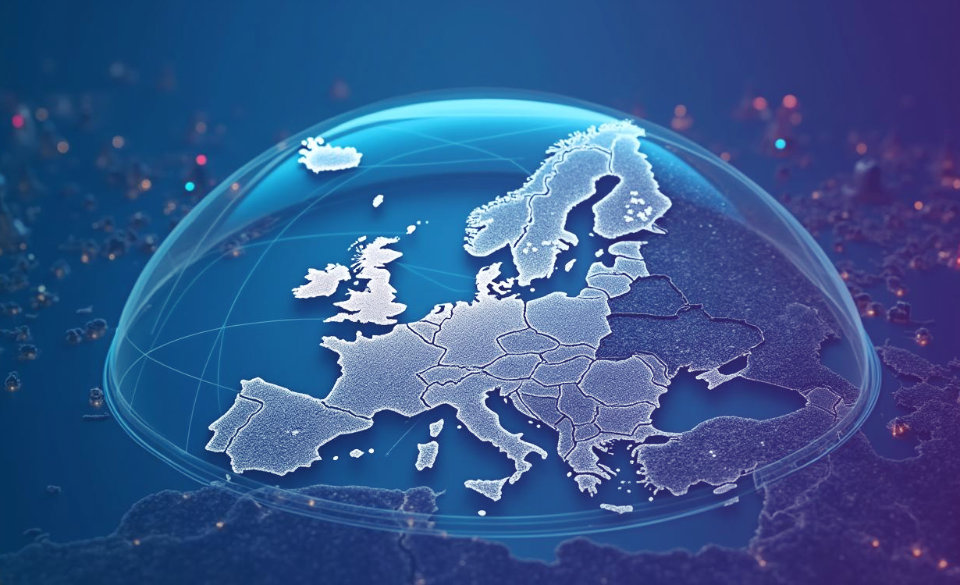
Digital sovereignty is no longer a theoretical concept it has become a pragmatic and transformative strategy for governments, supranational entities such as the European Union, and private organizations. Today, control, autonomy, and governance over digital assets (data, infrastructure, software, and critical processes) are recognized not merely as security concerns, but as pillars of operational resilience, sustainable competitiveness, and technological leadership.
This approach does not dwell on the past or focus solely on threats, it builds capabilities to act autonomously, innovate without artificial barriers, and compete with advantage in a globalized digital environment.
What is digital sovereignty? A technical and operational framework
At its core, digital sovereignty is the ability to decide on and control critical digital resources under your own set of rules, jurisdiction, and values. This includes authority over:
- Physical and logical infrastructure (data centers, networks, computing systems)
- Data and systems for storage and processing
- Key software, services, and tools
- Technical, legal, and operational governance of digital assets and processes
It’s not just about data protection, it’s about ensuring that decisions affecting data and systems are made internally, with direct control over how they are managed, who has access, how they are audited, and under what regulations they operate.
1. States and digital sovereignty: strategic resilience and functional autonomy
For a modern state, digital sovereignty is equivalent to having control over strategic resources such as energy or transportation. Today, critical public services, such as healthcare, energy, communications, financial systems, and e-government, depend on complex digital systems. Losing control over them means losing operational capacity.
Key components of state digital sovereignty:
- Jurisdictional control over national critical data, systems, and processes
- Capacity to design, audit, and operate mission-critical technological infrastructure
- A local technology ecosystem that supports operations, maintenance, and platform evolution
- Specialized talent in cybersecurity, cloud, AI, and infrastructure management
State-level digital sovereignty not only strengthens resilience against global incidents or supply chain disruptions but also enables more agile public policies aligned with national interests and democratic values.
2. Europe and digital sovereignty: cooperation with control
The European Union has placed digital sovereignty at the center of its technological and economic transformation agenda. European digital sovereignty is defined as the autonomy to ensure the security, independence, and direction of the continent’s digital assets, while respecting democratic values, fundamental rights, and legislative control.
Key European initiatives:
- Defining common frameworks for security, interoperability, and data protection
- Developing digital infrastructure to offer viable European alternatives to non-European-dominated solutions (cloud, AI, semiconductors)
- Establishing public-private alliances to boost local technological capacities
- Offering incentives for R&D and investment in critical technologies with a European focus
Experts emphasize that digital sovereignty does not equate to protectionism, but rather the capacity to choose independently, cooperate on mutually beneficial terms, and compete globally from a position of strategic control, without abandoning market openness.
3. Enterprises: turning digital sovereignty into a competitive advantage
For organizations, digital sovereignty goes beyond a security label, it’s a strategy that enables operational resilience, regulatory compliance, and accelerated innovation.
Tangible benefits for organizations:
a. Full technical control:
Enterprises that control their critical infrastructure, data, and access processes are not subject to arbitrary decisions from third-party providers and can guarantee operational continuity and compliance with both local and supranational regulatory frameworks.
b. Compliance and traceability:
Owning infrastructure and governance mechanisms enables organizations to efficiently meet regulations like NIS2 and GDPR, with more precise internal audits and complete traceability.
c. Innovation without hidden dependencies:
Digitally sovereign organizations can test, iterate, and deploy internal or open standard-based technologies, reducing vendor lock-in and gaining technical flexibility to evolve faster than competitors.
d. Greater operational resilience:
Owning critical infrastructure reduces single points of external failure and strengthens recovery capabilities against unplanned disruptions whether regulatory, technological, or geopolitical.
A concrete trend in this direction is the development of secure and interoperable data spaces, promoted by governments and tech associations in Spain and other European countries, enabling data sharing without sacrificing control and sovereignty.
4. Governance and technological decision-making: who controls the future
Digital sovereignty is not just about technology—it’s about governance. True sovereignty is measured by who decides:
- What technologies to adopt, maintain, or replace
- How critical digital assets are administered and regulated
- What technical standards are mandatory or recommended
- How to respond to operational, legal, or security incidents
States and organizations that integrate digital sovereignty into their governance models are positioning themselves to make more informed, coherent, and strategic decisions, not under external pressure, but with direct influence and control.
5. Digital sovereignty as infrastructure for leadership
A core enabler of digital sovereignty is national or regional technical infrastructure. While Europe still relies heavily on foreign cloud services and technology platforms, there are clear initiatives to build alternatives.
One example is DNS4EU a European DNS resolution service operating under EU standards, aiming to reduce critical but invisible technical dependencies.
Furthermore, debates at European strategic summits underline the urgent need for sovereign cloud, native data infrastructures, and local cybersecurity solutions as essential components of not just security, but also economic and technological independence.
6. Digital sovereignty is not isolation: it’s smart choice and cooperation
A common misconception is to equate digital sovereignty with isolationism or protectionism. In reality, digital sovereignty enables cooperation from a position of autonomy, where each actor decides clearly:
- Where their data is hosted
- Who has access and under what rules
- How systems are audited and certified
- What technological and legal commitments exist with third parties
This approach promotes openness with control, where global cooperation is fully compatible with strategic direction based on democratic values, human rights, and security principles.
Cosmikal and digital sovereignty
In an environment where operational resilience and digital sovereignty are critical, Cosmikal offers an integrated solution for complete control over access, systems, and critical assets, both digital and physical. Its architecture is based on Shielded Remote and Local Workspaces, preventing direct exposure of internal systems and ensuring critical assets remain protected even against advanced threats or insecure protocols.
This infrastructure integrates:
- Privileged access management (PAM)
- Hardened remote desktops
- Virtualized environments
- IAM and DLP capabilities
- Real-time audit trails for all operations
Thanks to its LINCE certification granted by the Spanish National Cryptologic Center (CCN), Cosmikal’s Endurance (Remote Shielded Workspace) is validated for use in public administrations, essential service operators, and critical environments. It meets the rigorous standards of the National Security Framework (ENS) and supports NIS2 compliance, ensuring governance, privileged access control, data protection, and operational continuity.
With these capabilities, Cosmikal helps organizations turn digital sovereignty into an operational asset, transforming cybersecurity into a driver of innovation, compliance, and strategic leadership. Endurance not only protects critical systems, it guarantees control, resilience, and secure operations, positioning enterprises and governments as leaders in an increasingly regulated and interconnected digital ecosystem.
Conclusion: digital sovereignty as a catalyst for resilience and leadership
Digital sovereignty is now a strategic connector between security, operational autonomy, and innovation. It’s no longer about reacting to threats or ticking regulatory checkboxes, it’s about designing and operating systems with full control, transparency, and adaptability.
- For states, it means protecting essential services through internal control.
- For Europe, it’s about building a competitive tech ecosystem with its own standards.
- For businesses, it’s about turning digital and data management into a true competitive edge.
Digital sovereignty is not a defensive exercise, it’s a question of leadership:
Who decides? Who innovates? Who sets the rules in an increasingly digital and competitive world?