Cybersecurity audit: a guide to protecting your company’s most valuable asset
26 de February de 2026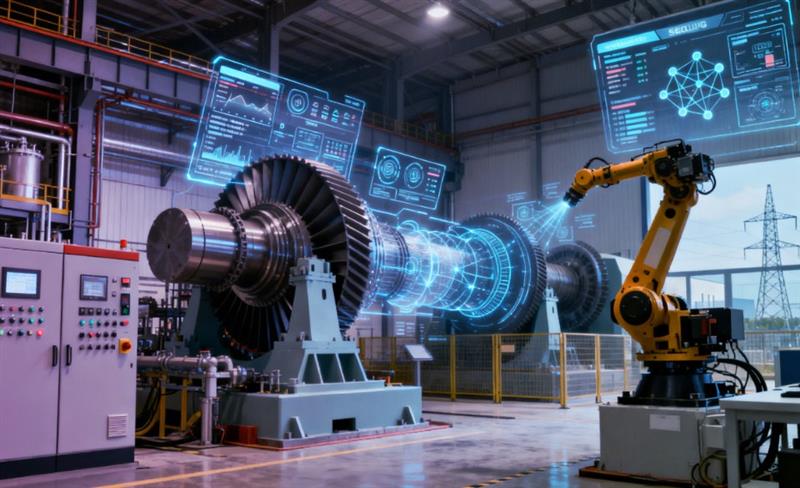
In the last decade we have not only digitized processes: we have digitized matter itself. The boundary between the logical world and the physical world is no longer a line: it is a dynamic interface. What were once isolated machines, disconnected PLCs, or manually operated infrastructures are now part of interconnected intelligent ecosystems capable of perceiving, deciding, and acting in real time. We are in the era of Cyber-Physical Systems (CPS). And this is not a passing technological trend; it is a structural transformation that redefines how industry, energy, transportation, and critical infrastructures operate.
What is a Cyber-Physical System?
A Cyber-Physical System represents the tight, bidirectional integration between physical processes, embedded computing, communication networks, control systems, and advanced analytics. While traditional computing is limited to processing information within virtual boundaries, CPS extend digital logic into the physical world, creating feedback loops where the physical affects the computational and vice versa.
The essence of a CPS is not connectivity, but control over critical physical assets, where a failure does not generate data loss but tangible impact in the real world, from misalignments in production lines to manipulation of electrical or mechanical parameters that may compromise human safety.
The difference between IoT and CPS
They are often confused, but technically they are not the same. IoT devices collect data and transmit it to analytical systems. CPS, on the other hand, integrate real-time control with autonomous physical actuation capability. For example, a temperature sensor connected to the cloud belongs to the IoT, while a system that measures that temperature, analyzes patterns, adjusts valves, and regulates thermal flow in real time is a CPS. The distinction is critical: in CPS, information generates physical action, which multiplies the responsibility and complexity of their security.
Anatomy of a CPS: the 5C architecture
An asset is considered a mission-critical cyber-physical system when it operates under the 5C architecture, a conceptual framework that articulates the capture, processing, and action upon the physical world.
- Connection: This constitutes the foundation: industrial sensors, edge devices, and protocols such as OPC-UA or Modbus collect essential physical variables. Without this layer there is no perception, and without perception there is no control.
- Conversion: The raw data captured is transformed into meaningful information through conversion, a process involving normalization, noise filtering, and event structuring to generate useful operational indicators, a kind of initial intelligence that allows the system to “understand” its environment.
- Cyber: Introduces the concept of the digital twin: a dynamic virtual replica of the physical asset that allows scenarios to be simulated, failures to be predicted, and decisions to be evaluated before being physically implemented, reducing operational risks and accelerating decision-making.
- Cognition: Adds a layer of advanced interpretation through artificial intelligence, machine learning algorithms, and predictive models, moving from passive monitoring to prescriptive maintenance and anomaly anticipation.
- Configuration: This is the system’s ability to act autonomously: adjusting parameters, reconfiguring lines, redistributing loads, and optimizing processes without direct human intervention. This final phase transforms information into physical action, and with it, exponentially increases the risk surface if not securely controlled.
Areas of impact
CPS are not simple tools; they are critical infrastructures with tangible risk. Their impact is especially evident in sectors where precision, safety, and operational continuity do not tolerate failure.
- Smart manufacturing: CPS enable mass customization and flexibility in production. Machines communicate to optimize flow, reduce energy consumption, and anticipate failures through predictive analytics. Each micro-adjustment in the assembly line has direct repercussions on the quality of the final product, making the security of these interactions as critical as their efficiency.
- Critical infrastructure and energy: Smart power grids balance variable loads from renewable sources with urban demand in milliseconds. Improper manipulation of measurements or control setpoints can cause outages, equipment damage, or even risks to the population. Here, a CPS does not just manage energy: it manages risk.
- Autonomous mobility and connected transportation: CPS coordinate vehicles, fleets, and urban traffic through V2X communication, advanced sensors, and real-time data processing. A latency error or interpretation failure can have immediate consequences for road safety and logistical efficiency, demonstrating that these systems are not optional: they are essential for the safe operation of smart cities.
- Healthcare and advanced medical devices: Surgical robots, remote monitoring systems, and implantable devices depend on precise and secure control. Here, the impact of failure is not measured in data loss, but in life-threatening risks for patients.
Security and resilience: the new priority
Connecting physical assets to digital systems expands the attack surface and changes the rules of the game. While in traditional IT the most valuable assets are data, in CPS vulnerability translates into the ability to alter physical reality, generating risks that go beyond conventional cybersecurity.
Protecting CPS requires a holistic approach, from authentication and privileged access control to segmentation between IT and OT, continuous monitoring, and resilient architectures capable of isolating incidents without compromising operational continuity. Resilience stops being a reaction and becomes an intrinsic design principle: systems capable of detecting anomalies, adapting, and continuing to operate without massive manual intervention.
Regulation and standards
CPS are developed under international frameworks that establish interoperability and security standards. NIST defines the reference framework for securely integrating computing, control, and networks. The NSF funds research that pushes the boundaries of what is currently possible in CPS. IEEE publishes technical studies on sensor and actuator integration, while initiatives such as Plattform Industrie 4.0 consolidate advanced industrial practices, creating a global reference ecosystem. In Europe, regulation around critical infrastructures and IT/OT convergence continues to evolve, driving the need for secure and auditable CPS.
Towards Industry 5.0: collaborative autonomy
The evolution of CPS leads us toward systems that not only execute human commands but collaborate with humans in decision-making. Industry 5.0 does not imply more blind automation, but the integration of contextual intelligence, haptic interfaces, industrial augmented reality, and adaptive systems that prioritize efficiency, resilience, and sustainability. The combination of human creativity with the physical intelligence of CPS redefines what we understand as productivity and industrial safety.
Cyber-Physical Systems will transform the way we interact with the physical world as profoundly as the internet transformed how we interact with information. But this transformation brings a colossal challenge: every line of code controlling physical processes is a potential attack surface. The adoption of CPS is inevitable; their security is not optional.
When digital systems control the physical world, cybersecurity ceases to be a department and becomes the structural pillar of critical infrastructure. In this context, planning, architecture, and resilience are the only way to ensure that the cyber-physical revolution is secure, efficient, and sustainable.
Security by design in Cyber-Physical Systems: access control as a structural pillar
In an environment where software governs physical processes in real time, security stops being an additional layer and becomes an intrinsic architectural attribute. In Cyber-Physical Systems, the real point of control is not only the sensor, nor the predictive algorithm, nor even network segmentation: it lies in the privileged session that allows modification of critical physical parameters.
IT/OT convergence has eliminated the historical separation between the corporate domain and the industrial domain. Control servers, engineering workstations, SCADA systems, and edge devices now share technological dependencies, IP connectivity, and in many cases authentication mechanisms inherited from the IT world. This creates a dangerous paradox: infrastructures with physical impact operate under access models designed to protect information, not mission-critical physical processes.
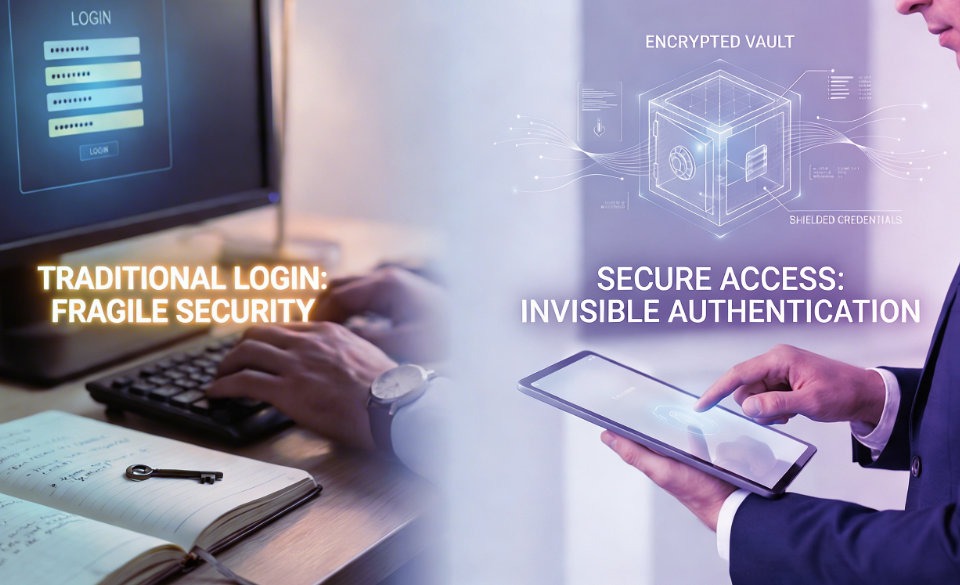
In a CPS, a privileged credential does not grant access to data; it grants the ability to alter pressure, electrical frequency, rotation speed, antenna configurations, or production setpoints. Therefore, the security model must pivot from perimeter protection to exhaustive control of identity, session, and operational context.
From an advanced architectural perspective, protecting a CPS implies introducing an independent control plane that decouples the user from the physical asset. This requires that no administrative connection reach the industrial system directly. Instead, all interaction must be mediated by a session broker that verifies identity, applies dynamic policies, and limits the exposure surface.
Zero Trust architecture for Cyber-Physical Systems
Under this approach, the user does not establish a direct network connection with the asset; instead, they access a controlled execution environment where only interaction events, such as keyboard, mouse, video, or audio signals, are transmitted, eliminating the possibility of lateral transfer, direct file injection, or internal pivoting.
This model not only reduces the attack surface; it transforms risk governance. Each session becomes an auditable entity, with complete traceability of executed commands, modified parameters, and intervention duration. In regulated environments, this forensic reconstruction capability becomes both an operational and regulatory requirement.
Contextual authorization and dynamic least privilege in CPS
Security by design in CPS also requires adopting principles of contextual authorization and dynamic least privilege. Authentication alone is not sufficient; it is necessary to determine whether access is consistent with the operational state of the system, the criticality of the asset, and the authorized time window. Just-in-time access and immediate revocation upon anomalies become essential mechanisms for preserving systemic resilience.
In this context, Endurance aligns with a protection architecture specifically oriented toward environments where the digital controls the physical. By integrating privileged access control and isolation of the industrial asset through a hardened remote desktop, a structural barrier is established that prevents direct access to critical infrastructures, even when connectivity is required for operation or remote maintenance.
The strategic implication is clear: as CPS evolve toward higher levels of autonomy, identity and session control become the true security perimeter. Infrastructure is no longer defended only with firewalls and segmentation; it is protected by controlling who can influence the physical behavior of the system, under what conditions, and with what level of supervision.
Ultimately, when code governs matter, privileged access management ceases to be an operational matter and becomes a structural element of industrial security. Designing CPS without a robust access control plane is not just a technical weakness; it is a systemic vulnerability. And in infrastructures where failure is not an option, access architecture is literally the line that separates operational continuity from real physical risk.